
Canada’s Provincial Nominee Program (PNP) offers an excellent pathway to permanent residency for skilled workers, entrepreneurs, and international graduates. With each province and territory in Canada running its own unique PNP, individuals have a variety of ways to immigrate, making it an attractive option for many. In this guide, we will walk you through the PNP, explaining its different streams, eligibility requirements, application processes, and the benefits it offers. Whether you’re a highly skilled professional or an entrepreneur looking to start a business in Canada, the PNP can help make your Canadian dream a reality.
What is the Provincial Nominee Program (PNP)?
The Provincial Nominee Program (PNP) is an immigration program that allows Canadian provinces and territories to nominate individuals for permanent residency in Canada. It is designed to help provinces select immigrants who are best suited to meet their labor market needs and contribute to their local economies. PNPs cater to a wide range of candidates, including skilled workers, semi-skilled workers, entrepreneurs, and international students.
Unlike the Express Entry system, which is managed by the federal government, the PNP is managed by individual provinces. This means that each province has its own criteria, streams, and processes, allowing them to select candidates who are most likely to settle and thrive in their specific region. With different streams available in each province, applicants can choose a stream that aligns with their skills, experience, and future aspirations.
How PNP Differs from Express Entry
While the Express Entry system manages applications for federal immigration programs, the Provincial Nominee Program allows provinces to nominate candidates who may not meet the criteria for Express Entry but still have the skills and qualifications needed to contribute to their provincial economy. Here’s how the two systems differ:
- Eligibility Requirements: The eligibility requirements for PNPs can vary greatly depending on the province. While Express Entry focuses on factors such as age, education, language skills, and work experience, PNPs often have additional streams specifically for entrepreneurs or workers in demand by the province.
- Provincial Nominations: If you apply through a PNP, and your application is successful, you will receive a provincial nomination. This nomination gives you 600 additional points in the Comprehensive Ranking System (CRS), making it easier for you to receive an Invitation to Apply (ITA) through Express Entry.
- Flexibility: PNPs offer a more flexible pathway as provinces are able to nominate candidates based on regional needs. For example, if a province is facing a shortage in a certain industry, it can prioritize applications from individuals with skills in that industry.
PNP Streams – What You Need to Know

Each province offers different PNP streams designed for specific categories of immigrants. Below are some of the key PNP streams that skilled workers, entrepreneurs, and international students can apply for:
1. Skilled Worker Streams
These streams are designed for skilled workers who have work experience in specific professions that are in demand in the province. Skilled workers may be nominated for permanent residency if they meet the provincial eligibility requirements, which usually include:
- A valid job offer from a Canadian employer in the province
- A certain level of education and professional qualifications
- Language proficiency in English or French
- Relevant work experience in a skilled occupation (NOC 0, A, or B)
Example: The Ontario Immigrant Nominee Program (OINP) offers a Skilled Worker stream for those with work experience in high-demand fields such as IT, healthcare, and engineering.
2. Entrepreneur Streams
The Entrepreneur Stream is ideal for individuals who want to invest in or start a business in Canada. Each province offers unique requirements for entrepreneurs, including minimum investment amounts and business experience.
- A valid business idea or plan
- Proof of investment capacity
- Management experience or previous entrepreneurial experience
- Demonstrated interest in settling in the province
Example: The British Columbia Provincial Nominee Program (BC PNP) has an Entrepreneur Stream that requires applicants to invest in and actively manage a business in the province.
3. International Graduate Streams
International graduates who have completed a post-secondary education in Canada may be eligible for PNP streams aimed at retaining local talent. These streams provide a pathway for students to transition from a study permit to permanent residency.
- A Canadian post-secondary degree or diploma
- A job offer in the province (for some provinces)
- Intention to live in the province after graduation
Example: The Saskatchewan Immigration Nominee Program (SINP) offers a Graduate Stream for students who have studied at a recognized institution in Saskatchewan.
4. Semi-Skilled Worker Streams
Semi-skilled workers, particularly those in agriculture, hospitality, and transportation, are eligible for these streams. These streams are beneficial for individuals who may not meet the strict qualifications of skilled worker programs but still have valuable experience in essential industries.
- Work experience in a semi-skilled occupation
- A valid job offer in the province
- Language skills and education requirements, which vary by province
Example: Manitoba’s PNP includes a Semi-Skilled Worker stream to help meet the demand for workers in various industries such as hospitality and construction.
Eligibility Requirements for PNP
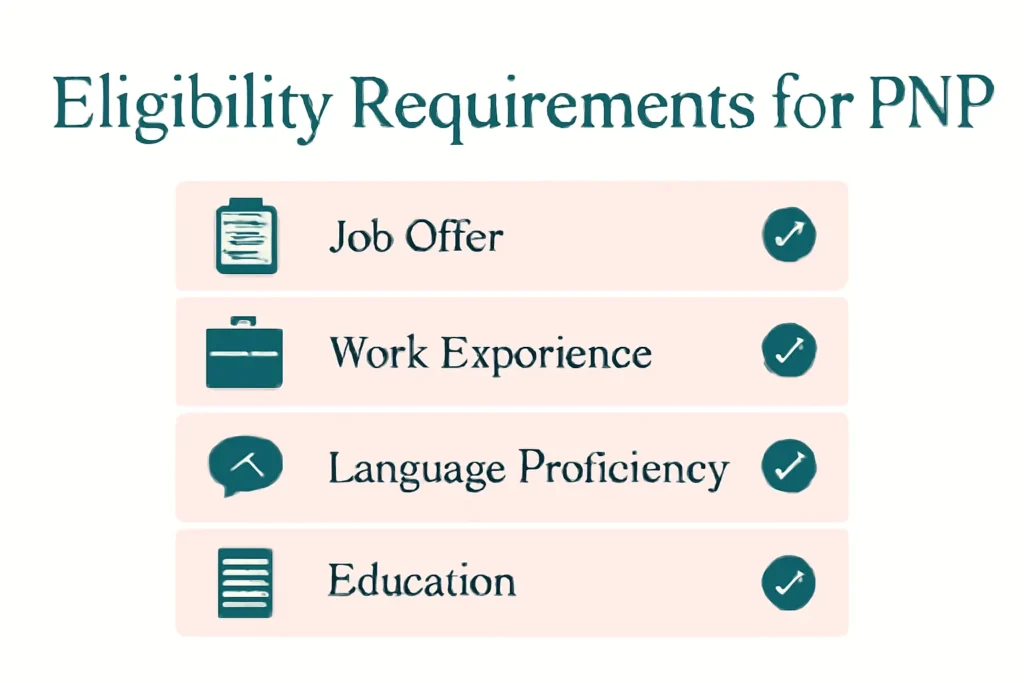
Eligibility for the Provincial Nominee Program depends on several factors, including the type of stream you are applying for. However, there are some general requirements common to most PNPs:
- Job Offer: Most PNP streams require applicants to have a valid job offer from a Canadian employer in the province they are applying to.
- Work Experience: Applicants must have work experience in a skilled occupation (NOC 0, A, or B) or a semi-skilled occupation depending on the stream.
- Language Proficiency: A minimum level of language proficiency in English or French is usually required, with higher thresholds for skilled workers.
- Education: Many provinces require applicants to have at least a high school diploma, with higher education levels necessary for skilled worker streams.
- Intent to Settle: PNPs generally require applicants to demonstrate their intent to settle and work in the province after receiving their nomination.
Application Process – Step-by-Step Guide
The process for applying to a PNP generally follows these steps:
- Determine Your Eligibility: Review the different streams available in your desired province and determine which one aligns with your skills, education, and experience.
- Submit an Expression of Interest (EOI): Some provinces require you to submit an Expression of Interest (EOI) to indicate your interest in applying for nomination.
- Receive an Invitation: If your EOI is successful, you may be invited to apply for provincial nomination. Not all provinces require an EOI.
- Submit the Application: Complete and submit your application for provincial nomination along with required documents, such as your job offer, language test results, and work experience documents.
- Wait for the Nomination: After your application is reviewed, the province will either nominate you for permanent residency or request further information.
- Apply for Permanent Residency: Once nominated, you can apply for permanent residency through the Express Entry system or directly through the provincial process.
Benefits of the PNP
There are several key benefits to applying through the Provincial Nominee Program:
- Faster Processing Times: PNPs often have shorter processing times compared to federal immigration programs, making them an attractive option for those looking to immigrate quickly.
- Additional CRS Points: If you receive a provincial nomination, you automatically receive 600 additional points towards your Comprehensive Ranking System (CRS) score, significantly improving your chances of receiving an Invitation to Apply (ITA) through Express Entry.
- Tailored Pathway: PNPs offer more flexible pathways tailored to specific provincial labor needs, allowing you to apply even if you don’t meet the federal Express Entry criteria.
Success Stories – Real Examples of PNP Success

One of the most compelling reasons to consider the PNP is the many success stories of applicants who have successfully navigated the system:
- Maria from the Philippines applied through the Ontario Immigrant Nominee Program’s Skilled Worker stream after receiving a job offer from a Toronto-based tech company. She received her provincial nomination and quickly received an ITA through Express Entry.
- John and Sarah from the UK, a couple with entrepreneurial experience, received nominations through the British Columbia PNP Entrepreneur Stream. After successfully investing in a local business, they received their permanent residency and are now thriving in their new community. Check out more information if you have further questions.
Conclusion:
The Provincial Nominee Program offers a valuable and diverse pathway to Canadian permanent residency for skilled workers, entrepreneurs, and international students. Each province has its own unique opportunities, so it’s important to research the specific streams that align with your career, education, and aspirations. By exploring the PNP, you could be one step closer to calling Canada your home.
Ready to take the next step? Find the Right PNP Stream for You and start your journey to Canadian permanent residency today with ICAN Immigration Law Group!